
Welcome
Environment, water and energy
Digital Marking and Communications
by
Media Strategy
digital content creators specialising in the renewable energy sector

Offshore Energy
Establishing offshore renewable energy infrastructure
Australia’s renewables industry has hailed as “momentous” the news that the federal government has officially commenced the process to declare Gippsland, in Victoria, as Australia’s first zone for offshore wind project development. Public consultation on the proposed Bass Strait off Gippsland region will begin immediately, the Albanese government said on Friday morning, to work with communities, environmental groups, industry and the maritime sector on establishing the potentially massive new industry. Department of Energy,

7 star energy efficiency
All new homes built in Victoria need to meet new minimum energy efficiency standards.
A Passive House takes a ‘fabric first’ approach. The focus of the design is ensuring the thermal envelope (the layer that separates inside from outside) is optimised to provide comfortable, healthy, indoor conditions.
The definition of a Certified Passive House is:
… a building, for which thermal comfort (ISO 7730) can be achieved solely by post-heating or post-cooling of the fresh air mass, which is required to achieve sufficient indoor air quality conditions, without the need for additional recirculation of air.
Passivhaus Institut (PHI)
As air is a poor carrier of heat energy, the heating and cooling energy requirements of the building must be very low because there is not sufficient air flow to deliver large amounts of heating or cooling energy.
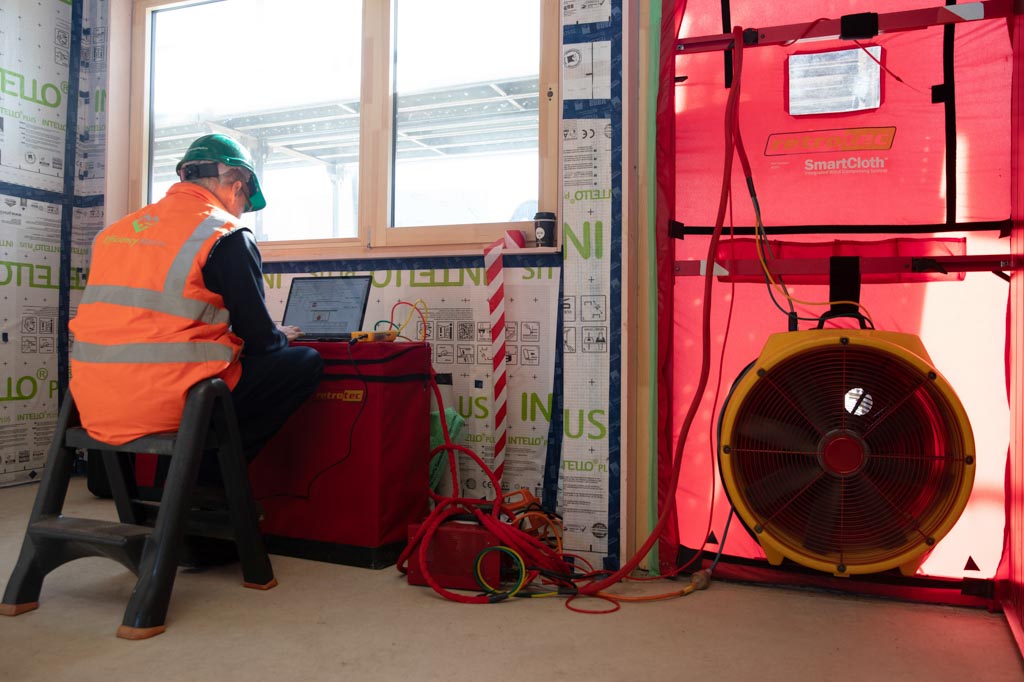
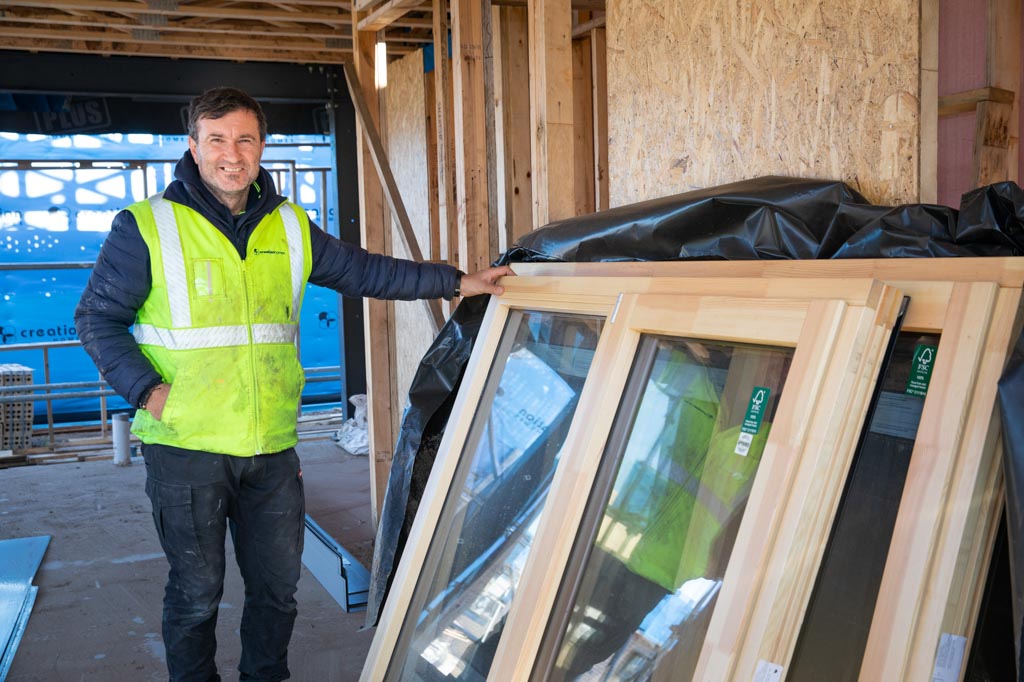
A Passive House is appropriately insulated, airtight, has quality windows and reliable ventilation systems with heat recovery. A certified Passive House undergoes a quality assurance process that ensures that it is built as designed and meets the comfort standards required by the Passive House standard.
Key points
‘Passive House’ is a design standard that achieves thermal comfort with minimal heating and cooling by using insulation, airtightness, appropriate window and door design, ventilation systems with heat recovery, and elimination of thermal bridges.
Originally developed in Germany in the 1990s, Passive House principles are now being used throughout the world.
Passive House standards are performance-based: they set performance targets to be met but do not dictate specific materials or products.
The Passive House Institute administers a certification scheme that allows a building to be called a Certified Passive House once it has met certain performance standards.
Passive House uses many of the same principles as passive design.
With the focus “Efficiency NOW!”, emphasises that there is no alternative to making buildings more energy efficient as quickly as possible. The renovation of existing buildings, in particular, offers great potential for climate protection.
Renewable hydrogen
A clean, safe and versatile energy carrier with potential to transform energy systems.
Renewable hydrogen is produced when the energy generated from renewable sources such as the sun, wind, tides or waves powers an electrolyser to convert water into hydrogen gas.
It is an odourless, colourless and lightweight zero-carbon gas. It can then be stored, transported – and used when needed.
Renewable hydrogen offers the potential as a clean, safe and reliable fuel source. Hydrogen production is becoming not only cleaner but cheaper. It could sustainably power Victoria’s transport, agriculture and manufacturing sectors. While creating jobs across our state.
Renewable hydrogen offers enormous potential as a perfectly clean, safe and reliable alternative to emission-intensive fuels.
Hydrogen to the Skies
Australian-first hydrogen drone to turn the skies green
Working with Swinburne University of Technology on another clean technology project.
Hydrogen to the Skies is spearheading the journey towards clean aviation by developing and trialling Australia’s first sovereign hydrogen-propelled drone.
Led by Swinburne’s Aerostructures Innovation Research Hub, or AIR Hub, the project brings together industry, government, CASA and Air Services Australia to create a real-world design and prototype.
The Hydrogen to the Skies project will design and integrate a new hydrogen propulsion system into a large-scale Australian-designed and manufactured drone, leveraging Australian expertise across the supply chain to bring this green technology to life.
Smart gardening
How can gardeners help combat climate change? Home gardeners can be an important part of the solution to climate change by using sustainable practices. Sustainable gardening and landscaping techniques can slow future warming by reducing carbon emissions and increasing carbon storage in soil and plants.
Plant plants! Green spaces can cool temperatures locally by reducing the heat generated by urban areas. Additionally, green plants uptake carbon dioxide, a greenhouse gas, during photosynthesis. Flower abundance and plant diversity in the garden can also benefit pollinators and other wildlife that are challenged by climate change.
Victoria in Bloom recognises and rewards the great work of gardening enthusiasts living in public or community housing.
It’s a way of saying thanks to renters for their hard work to create and maintain amazing gardens that contribute to the communities they live in.
Renters can enter all types of gardens – from balconies, to back yards and community gardens. No garden is too big or small.
There is no age limit either, with the Best Young Gardener category opening doors for under 25s who enjoy gardening or are thinking of a career in this field.
Guide to recycling
City of Port Phillip
Guide to recycling bins and services
Understand what waste paper, metals, glass and plastics can go into your recycling bin and how to dispose of the rest.
Items that go in your (yellow lid) recycling bin
Put paper and cardboard, bottles and jars, plastic containers, steel and aluminium cans and aluminium foil in your yellow recycling bin. Put them in loose (never in plastic bags). Always flatten cardboard boxes.
Paper recycling
We grind paper down and use it to make paper towels, cardboard boxes, toilet paper and newspapers.
Metals recycling
Metal can be melted down into new products such as food and drink cans.
All containers should be empty, rinsed and have their lids removed.
Glass recycling
Glass is crushed and melted to make new bottles and jars or can be used in road base.
Plastics recycling
Products with a 1,2,3,4 or 5 code inside the recycling symbol (triangle formed by 3 circling arrows) go into your recycling bin. If your item has a 6 or 7 code or no recycling symbol, put it into your garbage bin.
Recycled Playgrounds
Rotary Overseas Recycled Playgrounds
The Rotary Overseas Relocated Playgrounds project (RORP) finds surplus playground equipment in Victoria–and soon Australia-wide–and works with councils and private industry to ensure it can be tagged, carefully decommissioned, audited and sent to partner Rotary clubs for a further assessment and installation in communities without access to safe playgrounds.
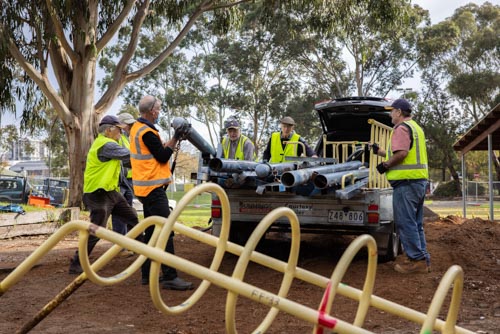
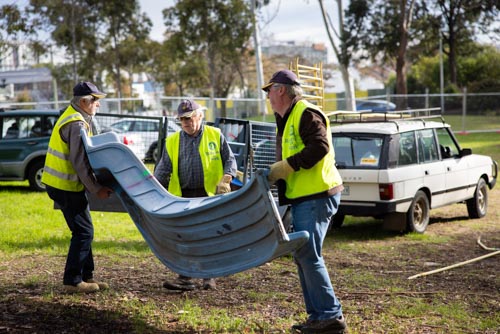
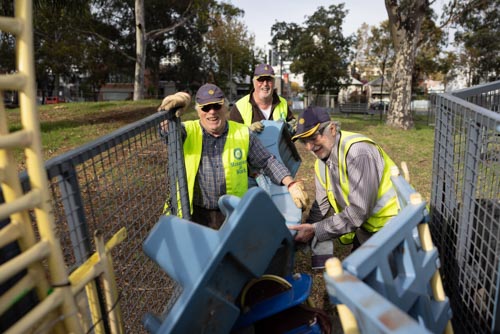
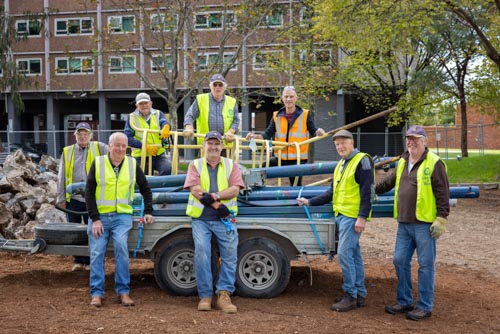
This environmentally sustainable project was started by the Rotary Club of Flemington/Kensington who collected unwanted playgrounds from councils and schools and then sending them on to disadvantaged schools overseas.
This project started with a single playground that was sent to a school in Sri Lanka, the project has collected over 50 playgrounds from across Victoria.
From farm to export
LDC Australia
Media Strategy was commissioned by LDC Australia to provide Digital content for all of their media channels. Working on the land with farmers and following their crops from farm to the export ports of Melbourne Victoria.
Using our years of drone experience and all the licensing requirements and insurance to go with it. Working with the port authorities, and other relevant bodies, we were able to get some stunning imagery.

Sustainable Farming
Behind the Farm Gate
Victorian farmers are world leaders in carbon abatement and a key part of the climate solution. Since 2005, Australian agriculture has reduced its direct emissions by 65%. We’ve done this by embracing new practices and technologies, such as rotational grazing, low-till cropping, and converting animal waste to renewable energy.
The VFF looks forward to partnering with the Victorian Government and across industry to help farmers respond to climate effects. Our collective mission must be to ensure Victorian farmers are acknowledged, valued and respected for the work they have already done, and continue to do, in reducing their on-farm emissions.
Promoting the proactive stance of agriculture in relation to climate change is critical to achieving appropriate regulation and programs from government that support agriculture utilising technology such as GPS agriculture as well as developing simple biodiversity certification systems that provide an income stream for farmers who take actions to sequester other sector emissions.
The Victorian horticulture sector has over 3700 horticultural businesses and a farm gate value of around $2.4billion.
We offer access to a range of important projects and grants to help enable you to get the most out of the resources on offer for your farm. Everything from bushfire recovery grants and drought assistance to educational resources to help foster the next generation of farmers. VFF projects and grants are here to help you and your farm.
Media Strategy Australia
We work with a diverse range of clients – large corporations and small enterprises as well as government departments, charities and magazine editors.